
LETTER: COFFEE IN SHUL: WHY ARE WE SO BUSY WATCHING EVERYONE ELSE?
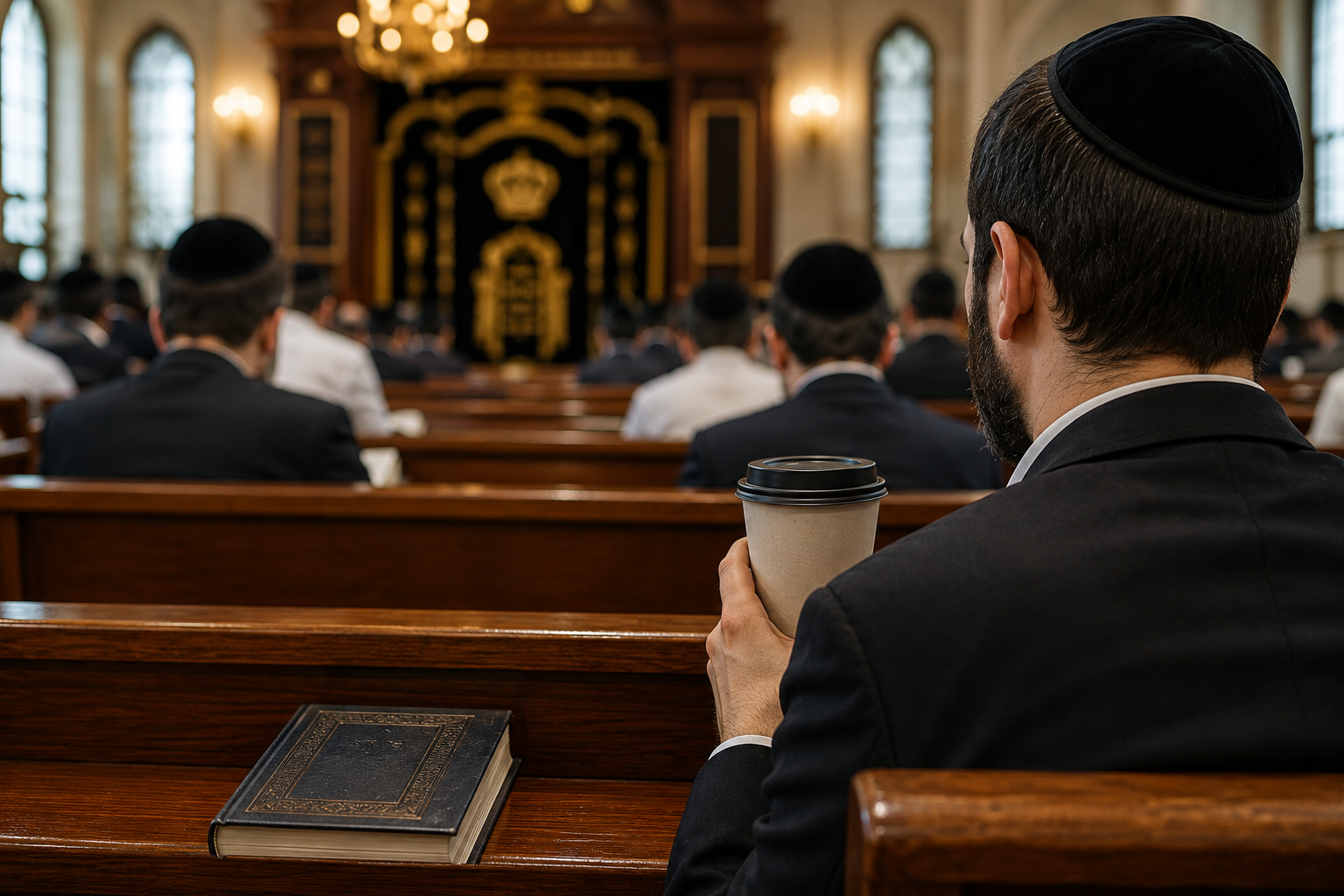
There has been a lot of discussion lately about bringing coffee into shul. Every shul has a Rav, and every Rav has the right to decide what is appropriate for his shul and what the decorum should be. If a Rav says no coffee, that should obviously be respected. But my broader question is: Why are we so worried about what the person next to us is drinking? If someone walks into shul holding a coffee, why should that disturb my davening? My job is to daven, focus on Hashem, and not spend my time looking around and judging what everyone else is doing. Talking during davening is different. Chazal and the poskim speak strongly about it, and practically, someone talking can directly interfere with another person’s ability to daven and concentrate. But someone quietly drinking a coffee? Even if you personally feel it isn’t appropriate or respectful, why does it have to become everyone else’s concern? And more broadly, it is worth asking why we so often feel the need to point out what others are doing wrong. Even when we are convinced we are right, what is gained by writing about it, commenting on it, or focusing on it? Too often, it shifts our attention away from our own avodah and places it onto someone else’s behavior. Instead of elevating ourselves, it can easily lead to more judgment, more division, and less focus on our own growth. We should also remember that the real work is not to refine other people, but to refine ourselves. We are far more responsible for our own middos, our own kavanah, and our own growth than we are for anyone else’s choices. If we invested the same energy we sometimes spend analyzing others into improving ourselves, we would likely see far greater progress in our own avodas Hashem. Maybe part of proper shul decorum is also learning to focus less on what the person next to us is doing and more on our own davening and on how we can become better ourselves. Let every shul’s Rav set the standards for his shul and let the rest of us concentrate on talking to Hashem and becoming better people ourselves.
There has been a lot of discussion lately about bringing coffee into shul.
Every shul has a Rav, and every Rav has the right to decide what is appropriate for his shul and what the decorum should be. If a Rav says no coffee, that should obviously be respected.
But my broader question is: Why are we so worried about what the person next to us is drinking?
If someone walks into shul holding a coffee, why should that disturb my davening? My job is to daven, focus on Hashem, and not spend my time looking around and judging what everyone else is doing.
Talking during davening is different. Chazal and the poskim speak strongly about it, and practically, someone talking can directly interfere with another person’s ability to daven and concentrate.
But someone quietly drinking a coffee? Even if you personally feel it isn’t appropriate or respectful, why does it have to become everyone else’s concern?
And more broadly, it is worth asking why we so often feel the need to point out what others are doing wrong. Even when we are convinced we are right, what is gained by writing about it, commenting on it, or focusing on it? Too often, it shifts our attention away from our own avodah and places it onto someone else’s behavior. Instead of elevating ourselves, it can easily lead to more judgment, more division, and less focus on our own growth.
We should also remember that the real work is not to refine other people, but to refine ourselves. We are far more responsible for our own middos, our own kavanah, and our own growth than we are for anyone else’s choices. If we invested the same energy we sometimes spend analyzing others into improving ourselves, we would likely see far greater progress in our own avodas Hashem.
Maybe part of proper shul decorum is also learning to focus less on what the person next to us is doing and more on our own davening and on how we can become better ourselves.
Let every shul’s Rav set the standards for his shul and let the rest of us concentrate on talking to Hashem and becoming better people ourselves.