LETTER: Lakewood Has Outgrown Its Government
We need a government that’s understands and fights for the common folk
Is Lakewood Ready for Real Government?
The recently attempted major property tax increase and surprise 200-percent increase in the non-mandated busing charge raises new questions about accountability and communication from our elected officials and should bring back the discussion of changing our form of government.
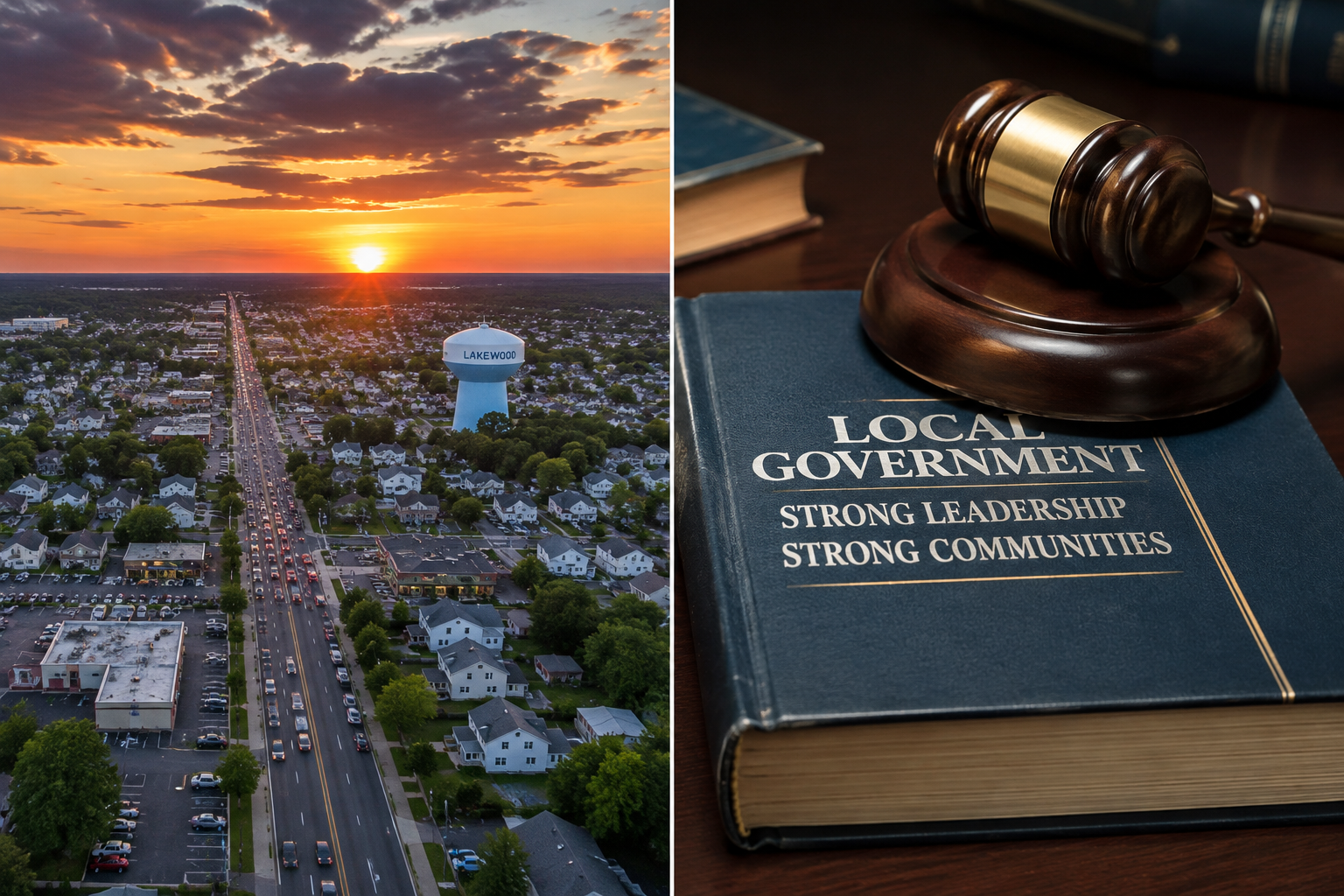
Our population now tops 150,000, larger than Trenton was when New Jersey’s capital first chose a strong-mayor system in 1962. Yet we still rely on the 19th-century Township Committee model: five part-time officials who rotate the gavel once a year while a professional manager handles day-to-day operations.
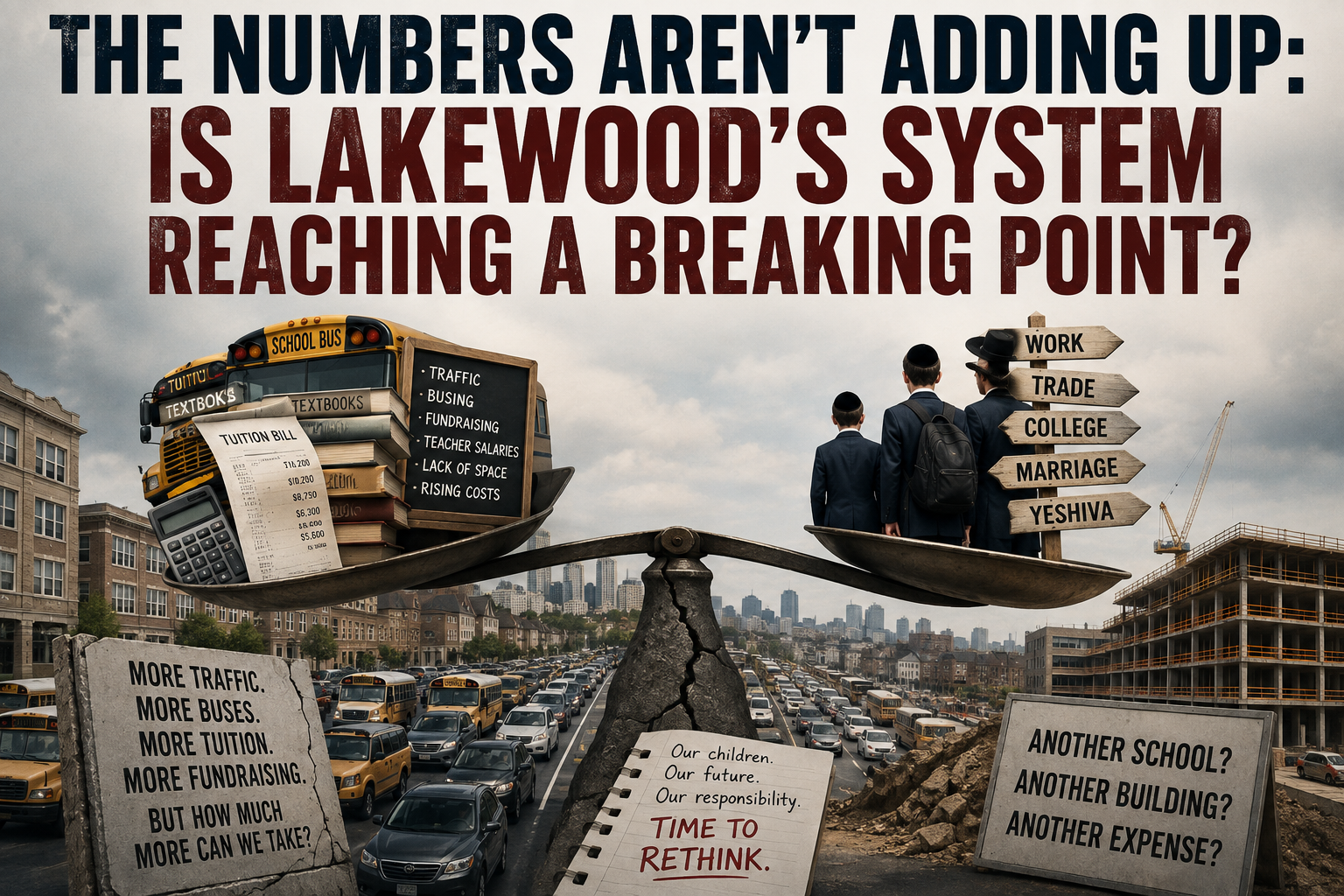
That structure worked when Lakewood’s biggest challenges were paving dirt roads. But it strains under today’s demands, coordinating 60,000 daily school-bus rides, negotiating multi-million-dollar shared-service contracts, planning housing for a birth rate that adds roughly 3,000 residents every year, and creating roads and parks to accommodate that level of growth.
A Mayor-Council charter, with one directly elected mayor and representative council members, offers Lakewood the clarity, capacity, and community voice we now lack.
A full-time mayor, elected directly by the entire township, answers to voters every four years. A mayor would have the time and obligation to pass a balanced budget. No more guessing which committeeperson oversaw a delayed or ill-timed road project, who’s responsible for not obtaining the FEMA reimbursement for this year’s $8 million snow expense (which Lakewood is legally entitled to), nor who decided to postpone a tax-abatement deal or who decided the best thing to cut out of the budget is the $2.7 million LSTA funding.
The Mayor-Council plan can also modernize representation. While the new charter lets voters choose five, seven, or nine council seats, most fast-growing towns adopt a seven- or nine-member body elected partly by ward. That means residents of Pine Park, Oak and Vine, Prospect Street, Westgate, Raintree, and Downtown would each have a representative who walks their potholes and sits in their traffic, not just an at-large committeeperson who never even campaigns town-wide.
Critics sometimes warn that adding a salaried mayor bloats payroll, yet the fiscal math is modest. A full-time mayor in a township our size typically earns between $110,000 and $150,000, a 10th of 1 percent of Lakewood’s $298 million 2025 municipal budget. If voters wish, the current $200,000 municipal-manager post can be folded into the new mayoral office, turning a net increase into a net saving.
More importantly, experience elsewhere shows that decisive leadership often reduces longer-run costs. Perhaps the most compelling reason to modernize is leverage in Trenton. As our politicians often tell us, Lakewood’s school-funding crisis, busing mess, and Route 9 traffic gridlock depend on state and federal dollars. A single, high-profile mayor carries more negotiating weight in the State House than five part-time voices.
Over the long haul, transparent leadership invites public trust, and public trust is the best fertilizer for economic development, grant success, and prudent budgeting.
How do we make the change? New Jersey’s Optional Municipal Charter Law offers two avenues:
1. The direct petition route. If roughly 10 percent of registered voters who cast ballots in last year’s Assembly race sign a petition, the Township Clerk must place the question “Shall Lakewood adopt the Faulkner-Act Mayor-Council plan?” on the next regular election that’s at least 60 days away. A simple majority of “yes” votes sets a transition calendar: drafting ordinances, redefining departments, and electing the first mayor and council, typically at the following general election.
2. The charter study commission route. Citizens or the Township Committee may place two questions on the ballot: (a) “Shall a five-member Charter Study Commission be elected?” and (b) “Shall the commission study our form of government?” If voters approve, the elected commission holds hearings, examines options, and within nine months, recommends keeping the status quo or moving to a new form. Its proposal then returns to voters in a second referendum.
Either path is purely local: Trenton needs only to certify the election results. No legislative approval, no state-house red tape.
Lakewood’s spirit has always been entrepreneurial, and when unified, we can define our future. Our civic framework should be just as forward-looking.
Name withheld