LETTER: THE NUMBERS AREN’T ADDING UP: IS LAKEWOOD’S SYSTEM REACHING A BREAKING POINT?
The author brings some valid points. Systems don’t last forever
Letter:Lakewood’s System Is Not Adding Up Anymore
Lakewood has reached a point where we need to stop patching one problem at a time and look at the entire system.
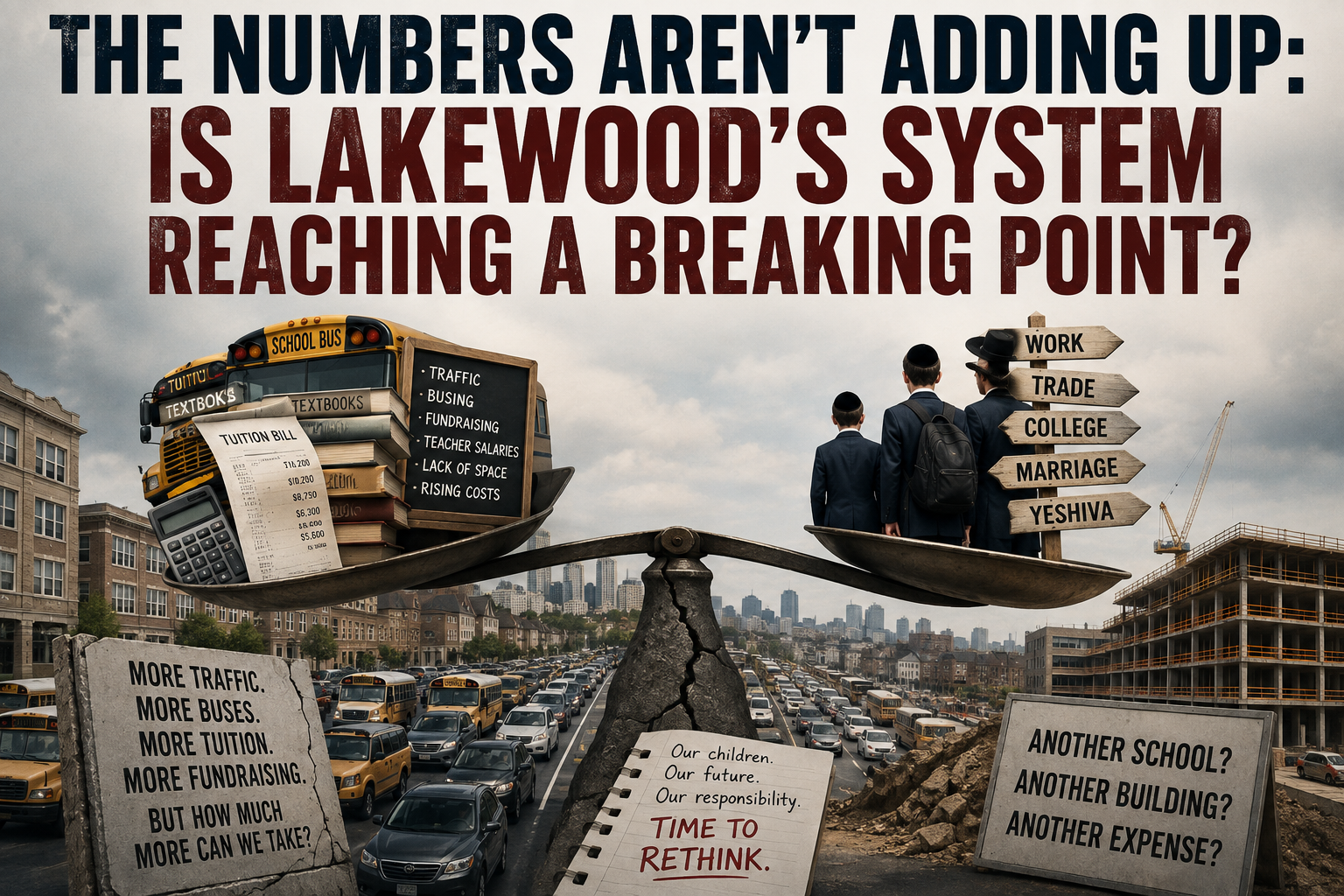
Busing is becoming more difficult and expensive. Tuition is crushing families. Schools are struggling financially. Traffic is overwhelming our roads. Parents are being asked for more money while many are already stretched to the limit.
At some point, we have to admit: the numbers simply aren’t adding up.
And we need to remember something important: nothing lasts forever.
A system can work extremely well for decades and still reach a point where it needs to change. Recognizing that isn’t an attack on what was built. It’s how you protect it.
We need to look toward the future instead of waiting for a crisis to force us to act. The cracks are already showing. We see them in tuition bills families cannot afford, transportation problems, traffic, teacher salaries, fundraising fatigue, lack of space, and parents struggling to keep up.
The question isn’t whether the system worked in the past. Clearly, it did. The question is whether the same model can support an even larger Lakewood 10 or 20 years from now.
Lakewood has grown tremendously, but we continue building and operating our educational system as if land, roads, buses, teachers, buildings, and family income are unlimited.
Do we really need so many separate schools?
There are high schools with relatively small student bodies operating large buildings, each requiring its own administration, rebbeim, teachers, transportation routes, maintenance, utilities, fundraising, and overhead. Could some schools merge? Could buildings be shared? Could we create larger schools while still maintaining different tracks and hashkafos within them?
The same question should be asked about the enormous number of batei medrash programs. Do we need dozens of separate programs, each with another building, staff, transportation needs, and expenses?
And we also need to have an honest conversation about what happens after high school.
Not every boy needs to remain in the same yeshiva framework until 22 or 23. Some boys thrive there and should absolutely continue. But others may be ready at 18, 19, or 20 to begin working, learn a trade, attend college, enter another appropriate program, or get married and begin building their lives.
We should stop treating one path as the only acceptable path.
Imagine if hundreds of young men who were ready for the workforce were working and earning instead of being pressured to remain in a system that may no longer be right for them. That could mean fewer buses, less pressure on buildings, fewer institutions that need constant fundraising, and young adults beginning productive lives earlier.
This isn’t anti-Torah and it isn’t anti-yeshiva. It is about building a sustainable Torah community.
We cannot simultaneously say we don’t have enough roads, don’t have enough buses, don’t have enough school space, can’t afford tuition, can’t pay teachers enough, and can’t afford property taxes — while refusing to reconsider anything about how the system operates.
Lakewood is no longer the small community it once was. We have built an enormous Torah community, and that is something extraordinary. But enormous communities require planning, efficiency, cooperation, and sometimes difficult changes.
Instead of creating another school every time there is a need, perhaps existing schools can expand or merge. Instead of creating another beis medrash, perhaps existing programs can accommodate more boys. Instead of automatically keeping every young man in yeshiva for years, perhaps we can recognize that different young men need different paths.
Nothing lasts forever, and no system should be considered untouchable simply because it worked before. The responsible thing is to see the cracks while they are still cracks — before they become a collapse.
The goal should not be to preserve every part of the system exactly as it has always been. The goal should be to preserve Torah, strong families, good chinuch, and a healthy community.
Right now, families are telling us something very clearly: the current system is becoming unaffordable and unsustainable.
It’s time for Lakewood’s rabbanim, roshei yeshiva, school administrators, askanim, business leaders, parents, and public officials to sit together and seriously ask:
What should Lakewood’s educational system look like for the next 20 years?
We need to see the future before it arrives. We need to acknowledge the cracks before they become impossible to repair.
Because simply adding more schools, more buildings, more buses, more traffic, more tuition and more fundraising cannot be the only answer.
A parent in Lakewood