LETTER: The $25,000 Question: Seminary vs. Beis Medrash
Great points that was sent in by a Lakewood parent
Seminary or Beis Medrash?
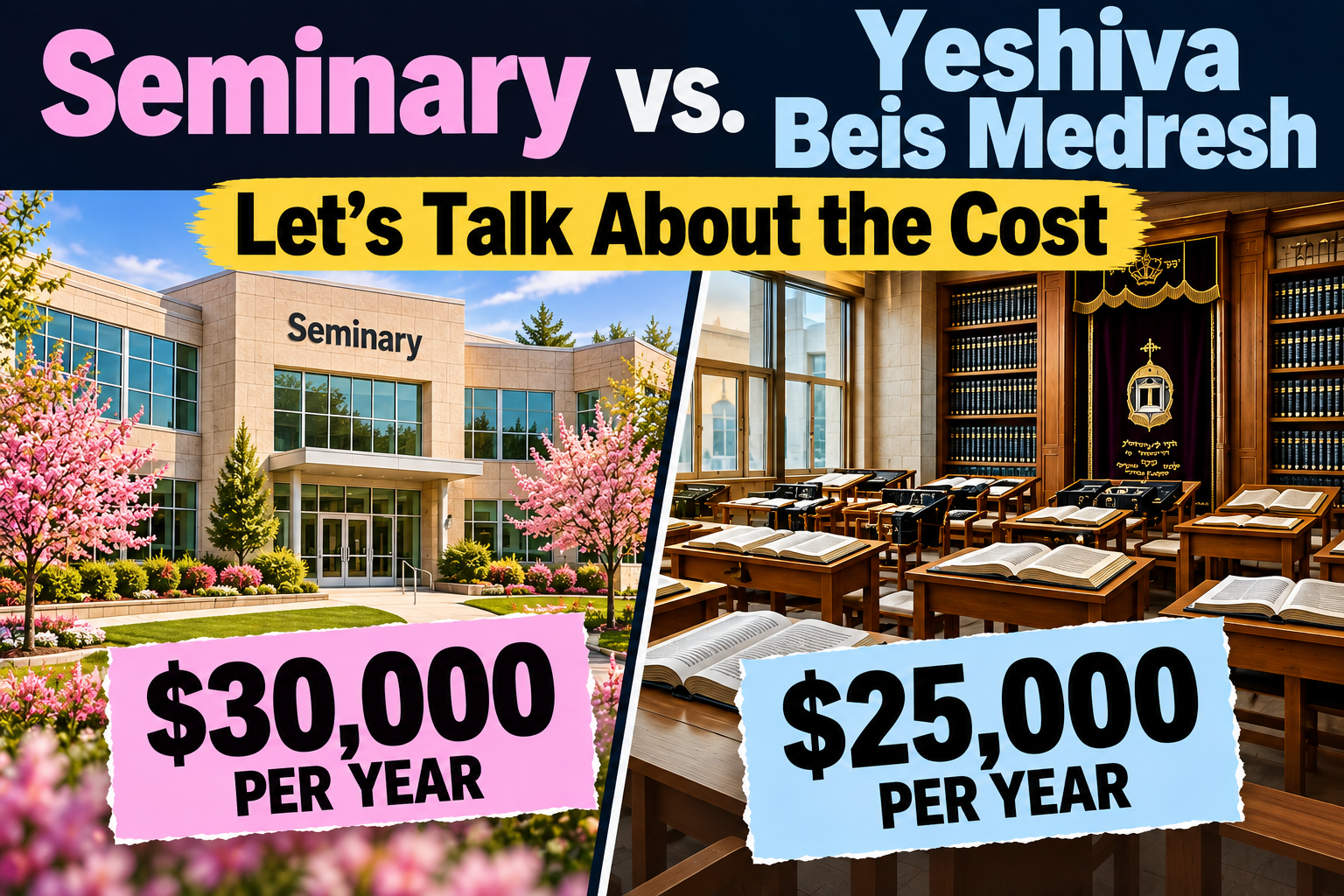
For decades, we’ve talked about the enormous cost of seminary—and rightfully so.
Families are spending tens of thousands of dollars for a year, and many parents are going into debt just to keep up with the expectations.
But if we’re going to have this conversation, we also need to talk about the cost of Beis Medrash.
We’ve created a system where boys can spend 5 or more years in Beis Medrash, sometimes including multiple years in Israel.
Let’s do the math.
If the total cost of tuition, room and board, and other expenses comes to approximately $20,000 per year, then:
1 year = $20,000
2 years = $40,000
3 years = $60,000
4 years = $80,000
5 years = $100,000
And that’s for one child.
If a family has two sons going through the same system, we’re talking about approximately $200,000.
Three sons? $300,000.
And this is before we even talk about the enormous costs of weddings, housing, supporting young couples, and raising the next generation.
So why do we act as if the seminary conversation is only a girls’ issue?
This is a family affordability issue.
Torah learning is incredibly valuable. Nobody is questioning that.
But does every boy really need the exact same number of years in Beis Medrash?
Could some boys marry younger, continue learning, and eventually enter the workforce?
Could we create different paths instead of assuming that every boy needs five, six or seven years before marriage?
We need to stop telling parents, “This is the system,” while simultaneously telling them not to go into debt.
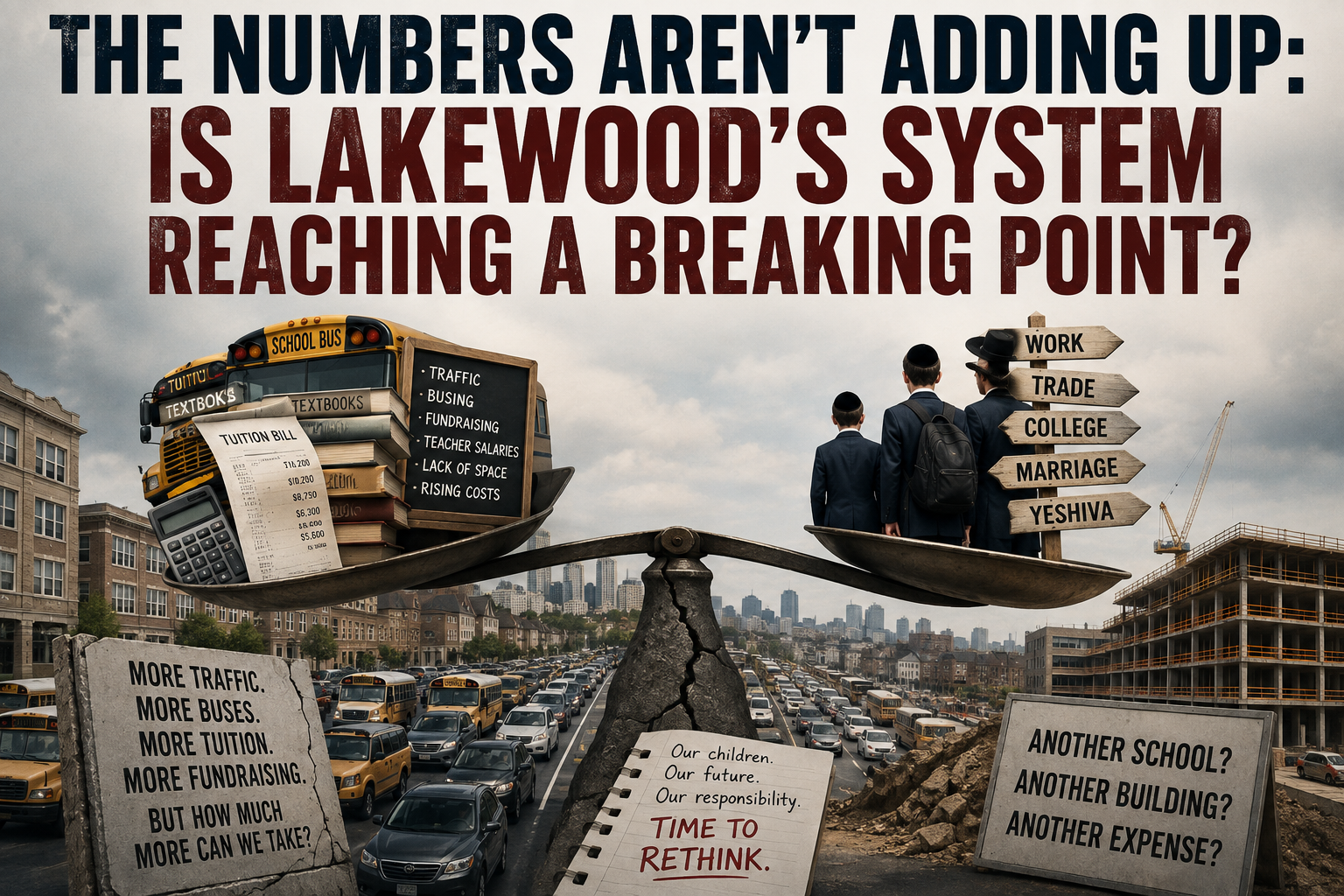
Maybe it’s time to rethink the system.
Let boys learn, marry younger, build a home, and become financially independent when they are ready.
The goal should be to build strong Jewish homes—not to leave parents with six-figure bills for years of education.
If we’re willing to question the cost of seminary, we should be willing to question the cost of Beis Medrash too.
Torah is important.
But that doesn’t mean the system has to be financially unsustainable.